
Researchers at IIT-Guwahati have identified a type of blue-green algae (cyanobacteria) that can effectively remove lead from contaminated water. The study highlights the role of exopolysaccharides (EPS) produced by the algae in absorbing lead, with laboratory experiments showing up to 66.2% removal. This discovery offers a promising, naturally abundant solution for water purification, though further validation is needed before commercial application.

Researchers at IIT Guwahati have conducted a study on how plants' internal plumbing systems respond to drought conditions. Their findings, published in "Applied Physics Reviews journal," reveal that plants narrow their microtubes and pits during water shortages to conserve water and maintain internal balance, offering crucial insights for developing drought-tolerant crops.
Researchers at the Indian Institute of Technology (IIT), Guwahati, have developed an innovative nature-based wastewater treatment system utilising taro plants and an engineered "zig-zag flow" design. This low-energy, compact technology offers a promising solution for treating highly polluted swine wastewater in decentralised livestock farms, particularly in rural and resource-limited regions.

IIT Guwahati researchers have developed SH²RFSSM, a model inspired by how biological neurons communicate.

Researchers at IIT-Guwahati have developed an inexpensive and efficient catalyst for producing hydrogen from water, a crucial step for the National Green Hydrogen Mission and the transition to sustainable energy. The catalyst uses nickel salt and an anthracene-based organic molecule, offering a cleaner alternative to fossil fuel-derived hydrogen.

IIT-Guwahati has partnered with Kaashyap Cleantech Innovations to commercialise bio-methanol production technology, which converts greenhouse gases into a versatile liquid fuel, offering environmental and performance benefits.
'Our research demonstrates the potential of perovskite-based semiconductor technologies for next-generation solar cells and memory devices.'
Researchers at IIT Guwahati have developed a method to enhance cement mortar, making it stronger, more durable, and capable of blocking harmful radiation, with the goal of improving the safety of nuclear facilities.

Researchers at IIT Guwahati have developed energy-efficient bricks designed to keep buildings naturally cool, offering a promising solution for sustainable construction. These bricks incorporate Phase Change Materials (PCMs) to absorb and release heat, reducing the need for air conditioning and lowering energy consumption.
Researchers at IIT Guwahati have developed a framework for designing earthquake-resistant 3D-printed concrete walls, potentially revolutionising construction in seismic zones.
Researchers at IIT Guwahati have developed advanced traffic stream models using high-resolution drone data from a Delhi highway. These models are specifically designed to analyse and predict traffic movement under the heterogeneous conditions prevalent on Indian roads, addressing limitations of existing global models. The study aims to improve traffic management, road design, and intelligent transportation systems in India.
Research scholars and post-graduate students at IIT-Guwahati are protesting a fee hike, while the institute claims the increase is necessary and only a small group is protesting.
Researchers from IIT Guwahati and BHU have devised an eco-friendly biological method to treat textile wastewater, specifically targeting toxic azo dyes. Their novel bacterium, 'Brevundimonas sp. AJZ05', effectively degrades 98.50 per cent of Direct Blue-6 dye, producing non-toxic byproducts, offering a sustainable alternative to conventional chemical treatments.

E-Eye, which cost about Rs 3,500 to develop, can test a sample for around Rs 2, making it particularly suitable for field-level water quality monitoring in areas where access to sophisticated laboratories is limited.
The 44th annual meeting of the Astronomical Society of India (ASI) was inaugurated at IIT Guwahati, bringing together astronomers, researchers, and students to discuss the future of astronomy in India.

Arunachal Pradesh Chief Minister Pema Khandu lauded the state's first 10-day artificial intelligence boot camp and hackathon at IIT-Guwahati. The programme aims to build AI skills, promote innovation, and create a future-ready digital workforce, offering hands-on training in AI/ML, Python, and NLP to 40 young participants.

rediffGURU Radheshyam Zanwar, founder of Zanwar Classes, suggests how to pick the best engineering college and course in India after class 12.

While no Indian institute features in the Top 100 of the QS World University Rankings 2027, IIT-Delhi improved its global standing by climbing from 123rd to 118th place to remain India's highest-ranked institution.

Public sector firms presented interesting offers on Day Zero placements at the IITs.

Researchers at Delhi's Indraprastha Institute of Information Technology have developed 'MutAIverse', a generative AI platform designed to decode DNA damage and identify potential causes of cancer. Tested on head and neck cancer patients in Guwahati, the platform successfully traced exposure to smokeless tobacco as a contributing factor. This innovation aims to shift focus from just diagnosis to understanding causative factors, potentially aiding in prevention and protection.

Seven Indian Institutes of Technology -- IIT-Madras, IIT-Bombay, IIT-Delhi, IIT-Kanpur, IIT-Kharagpur, IIT-Roorkee and IIT-Guwahati -- figured in the top 10 in the overall rankings.

While some researchers are developing prototypes for ventilators to overcome their shortage, others have teamed up to develop testing kits.

With 2,269 vacancies, the IITs currently have one teacher for every 16 students.

This year, campuses placed most number of students in the first phase compared to past few years.
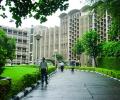
Among the six parameters, employer reputation was the strongest for IIT-B, with a rank of 93 globally.

India has also become the fourth best represented nation in the 2024 rankings, up from sixth last year.

Twelve universities from India feature in the top 100 of QS Rankings by Subject 2021.
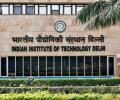
IIT-Delhi saw international training offers from Hong Kong, South Korea and the US.

The Indian Institute of Science (IISc), Bangalore, which is placed 33rd this year.

The Indian government's announcement of 10,000 additional seats in medical colleges next year, part of a plan to add 75,000 seats over five years, has been welcomed by education experts and stakeholders. The move aims to address the shortage of medical professionals and reduce the outflow of Indian medical students to other countries. The budget also includes infrastructure expansion at five new IITs to accommodate 6,500 more students and an allocation of Rs 500 crore to set up a Centre of Excellence in Artificial Intelligence for education.
The seven IITs are Kharagpur, Bombay, Madras, Kanpur, Delhi, Guwahati and Roorkee and the consortium is headed by IIT Bombay director Devang Khakhar.
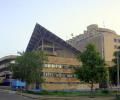
In the recently released EDU-RAND 2015 rankings, IIT Delhi is at the top of the list, followed by other IITs in Kharagpur, Mumbai, Chennai, Guwahati and Kanpur.
In the 2021 QS rankings announced in London on Wednesday, IIT Bombay continues to be the best-ranked Indian institute at 172, a 20-slot dip from the 2020 ranking.

Meet Indian Space Research Organisation scientist Ningthoujam Raghu Singh, who was one of the bright sparks responsible for sending Chandrayaan-3 to the moon.

Special infection proof fabric for usage in hospitals, low-cost corona virus testing kits, isolation pods for coronavirus infected patients, bubble helmets which can be an alternative for traditional oxygen masks and pendant to raise alarm on breach of social distancing, are also among the innovative ideas that have been given shape since the coronavirus outbreak in the country.

A gamechanger for offices and factories, Shycocan, claims to be able to clear an area of 1000 square feet from coronavirus.

Amid a row over irregularities in competitive exams National Eligibility cum Entrance Test (NEET) and National Eligibility Test (NET), the education ministry on Saturday notified a seven-member panel headed by former Indian Space Research Organisation (ISRO) chief K Radhakrishnan to ensure transparent, smooth and fair conduct of examinations through the National Testing Agency (NTA).

The Indian Space Research Organisation has resolved to alight its lander on the lunar surface with Chandrayaan-3 in addition to a maiden solar expedition in 2020.

Politics is not on the radar of 18 to 21-year-old Indians, reveals Rama Bijapurkar.

The construction of the Ram Temple complex in Ayodhya, including the main structure, is estimated to cost around Rs 1,100 crore and is expected to be completed in three-and-a-half years, said the treasurer of the trust overseeing the project on Monday.
